Have you noticed how I almost never paint exactly from a reference photo?
That’s not accidental.
Before I ever pick up a brush, I spend time analysing why a scene caught my eye in the first place — the mood, the shapes, the story — and then I paint my version of it, not a copy. When you work this way, painting becomes far more enjoyable, your decisions feel intentional, and the finished piece has more life and emotion in it. And people can see that.
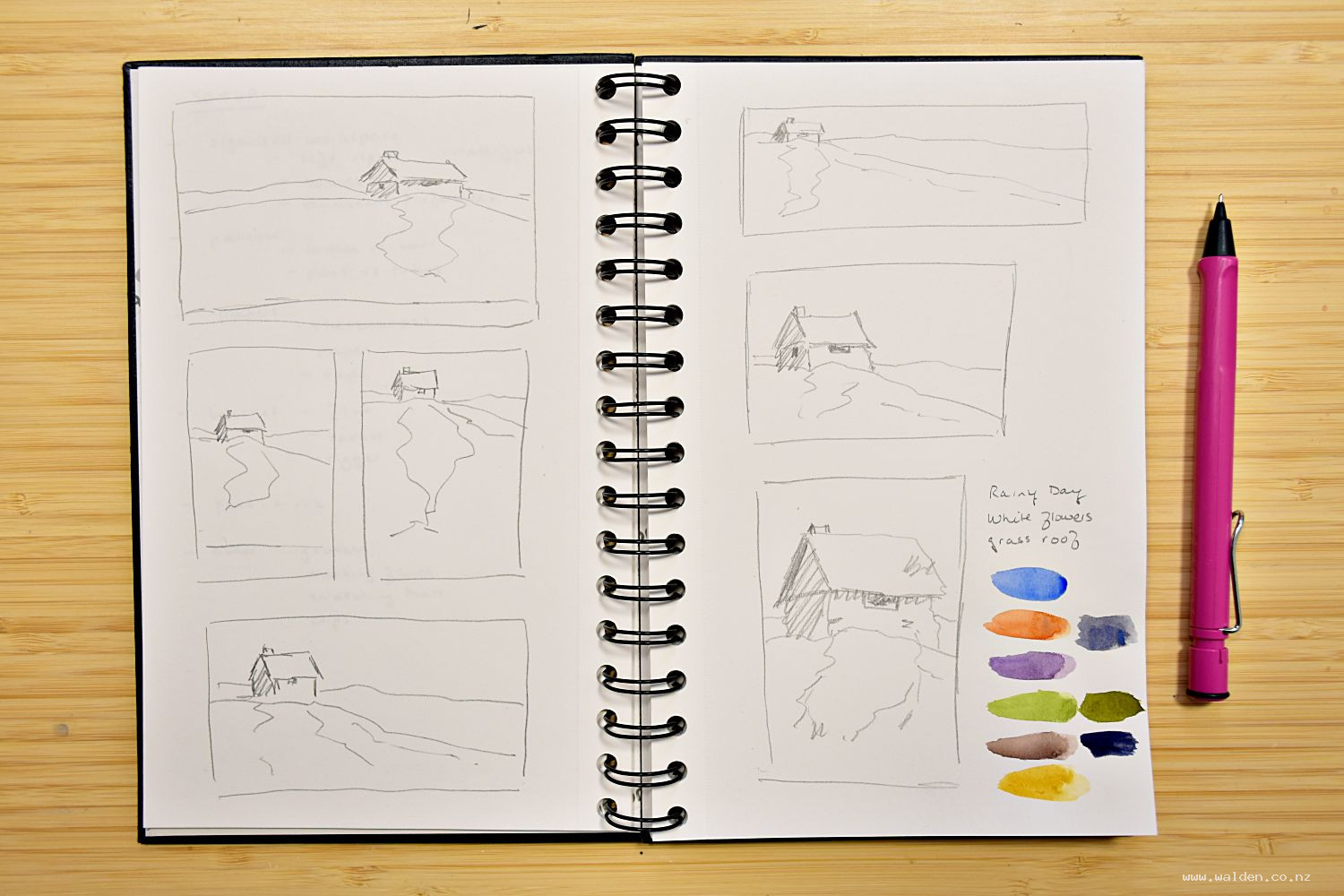
In last week’s Patreon tutorial, I shared a little behind-the-scenes glimpse of this process: the planning sketches, compositional experiments, and visual thinking that happened before the final painting even existed. My desk was covered in little studies and ideas, and it felt like a perfect opportunity to show how much thinking goes into what might look like a simple watercolour sketch.
This week, we take all of that planning — and turn it into a finished painting.
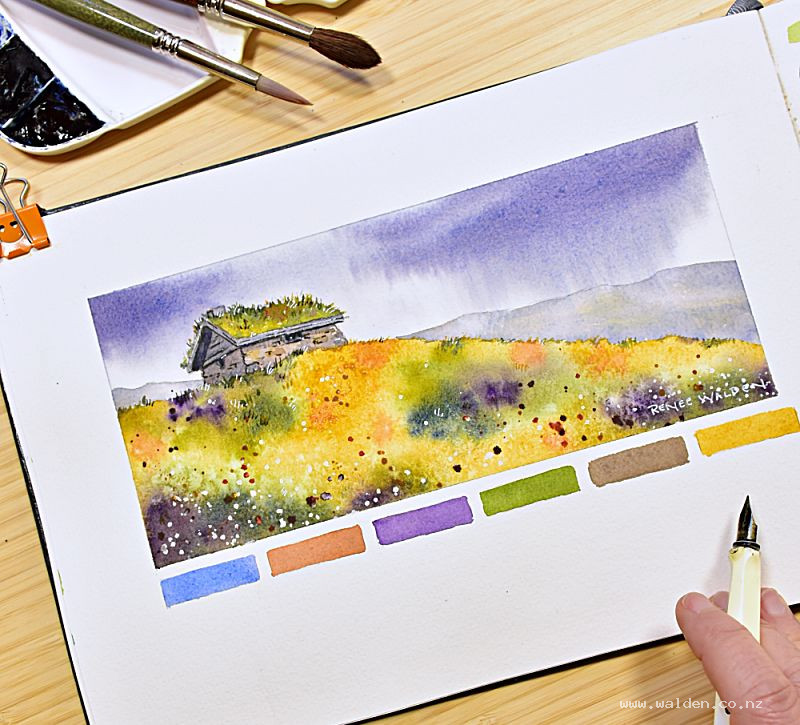
A charming norwegian cottage (and why I chose it)
Isn’t this a cute little scene?
This grass-roofed cottage is from Norway, and what immediately drew me in was the rainy sky and the grassy hill and the foreground full of flowers. Unlike many traditional Norwegian cottages, which are wooden, this one is built from stone — slightly unusual, and full of texture and history.
There’s so much to explore here:
a soft, rainy sky
a grassy hillside full of colour and movement
and of course, the cottage itself, with all its little details
This painting is the final version of the three different compositions I explored in last week’s planning lesson. But one of the lovely things about working this way is that there’s no single “correct” version — if one of the other compositions speaks, you can absolutely paint that and follow the same steps I give in this lesson.
The process stays the same. The story just shifts slightly.
The step-by-step watercolour process
In this step-by-step lesson, I walk you through the entire painting from start to finish, focusing on:
simplifying the landscape into clear shapes
suggesting rain and atmosphere in the sky
building texture in the grassy hill without overworking it
and adding just enough detail to the cottage to keep it believable, not fussy
As always, this lesson isn’t about copying every brushstroke — it’s about understanding why each stage works, so you can apply the same thinking to your own landscapes.
Thumbnail sketches for planning the sketch
Why planning makes your paintings stronger
If there’s one takeaway from these two lessons, it’s this:
When you slow down, plan and think of the story you want to tell, our painting becomes more confident, more expressive, and far more enjoyable to create.
Planning gives you freedom to ....
change the composition.
exaggerate what matters.
leave out what doesn’t.
And that’s where your personal voice really starts to show.
Paint along with me
This full step-by-step watercolour lesson is available now on my Patreon, along with last week’s planning post and sketches that show how the composition evolved.
If you’d like to:
build stronger landscape paintings
understand how to make compositional decisions
and paint scenes that feel personal rather than copied
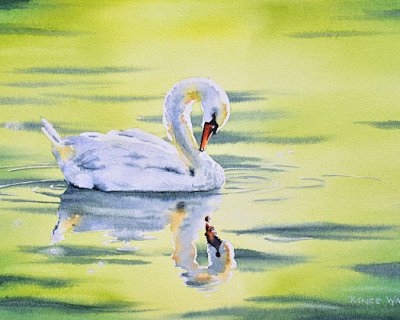
Watercolour tutorial — how to paint a swan and its reflection (step-by-step). A graceful white swan, softly lit and mirrored in still water — this step-by-step watercolour tutorial shows how to pa...
I love painting lighthouses, and given the opportunity to combine one with a stormy sky is always extra enjoyable. So mix up your favourite stormy blues and greys and let's paint a little drama! Happy...
I'm off to Italy next week for my last retreat of 2026 and I'm getting all sorts of things ready. One of them is, of course, my palettes. One of the questions I get asked a lot is how I decide which c...