what I've discovered about painting with honey-based watercolours
9 February 2026
Honey based watercolours from Deep Deep Light
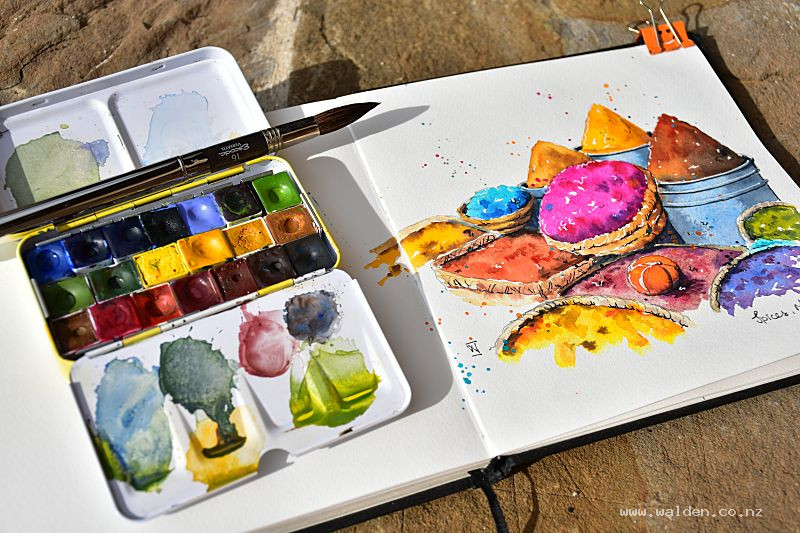
After months of painting with honey-based watercolours in pans from Deep Deep Light - in my studio and on location - I’ve got some thoughts about what makes these paints unique. Some of these discoveries were delightful surprises. Others took some adjusting to.
If you're curious about honey-based watercolours, or you've just started using them and thinking "wait, is this normal?" — this post is for you.
Please note I’m talking about pan paints here, not tube paints. For years I’ve painted with tube paints from various manufacturers that I squeeze onto my palette, let them dry overnight, and then it’s safe to fold up my palette and take it outside for painting. I’m not going to change my usual setup, I’ve just added these pan paints as a fun and exciting alternative.
A quick note: what is the honey for?
Watercolour paints aren’t just raw pigment. They usually contain gum arabic as the binder, and then other additives to increase plasticity, keep them moist, stop pan paints cracking, or to increase the flow of the colour.
Gum arabic is the actual binder (the glue). Honey is a humectant and plasticizer—it keeps the dried paint flexible, prevents cracking, helps it rewet easily, and acts as a preservative. Honey is hygroscopic - it attracts and holds moisture - which changes how the paint rewets, dries, and stays workable.
Some manufacturers don’t use honey. They use glycerin alone, or increase the gum arabic ratio. The paint is harder in the pan, slower to rewet, and the pan is more brittle when dry.
Here’s what I’ve noticed…
1. Honey-based paints wake up instantly
My usual experience with pan paints is that they take forever to activate. You spritz them and then usually have to scrub the pans a bit to get things going. With honey-based paints, I quickly learned that's completely unnecessary.
A barely-damp brush is enough. Sometimes even that feels like too much water.
Just like with my dried Daniel Smith tube paints…
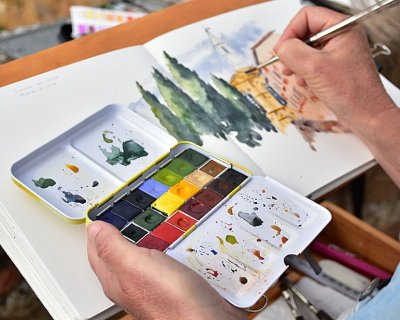
I can grab my sketchbook and start painting in seconds
Urban sketching on location feels effortless — no setup time
When inspiration hits, I'm not waiting around for my paints to cooperate
One thing to watch for: On humid days, your pans might already feel slightly wet to the touch. Adjust accordingly, or you'll end up with puddles.
2. They don’t crack and flake out of the pan.
This might sound like a minor thing, but it's actually saved me a fair bit of frustration.
With my old Winsor & Newton pans, I'd use them for a while and then notice hairline cracks appearing. Eventually, pieces would flake off or entire chunks would just fall out of the pan. It wasn't every colour, but it happened often enough to be annoying. In fact, I stopped using bought pans, and moved to tube paints because of this (and because I found them too hard to rewet as well).
Honey-based paints? I haven't had this problem yet.
3. They never really “set" on the paper
What I mean is that a dried wash of paint on the page can be very easily reactivated.
What I've learned to love about this …
I can lift highlights even days after painting
Soft corrections are incredibly forgiving
Edges can be gently reworked without scarring the paper
What took some adjusting:
If you like building up crisp, untouched layers through glazing, you need a lighter touch than usual. Too much water will wake up everything underneath.
I've come to think of these paints as having a memory — they're always willing to have another conversation, even when you thought the discussion was over.
4. There’s an unexpected sheen
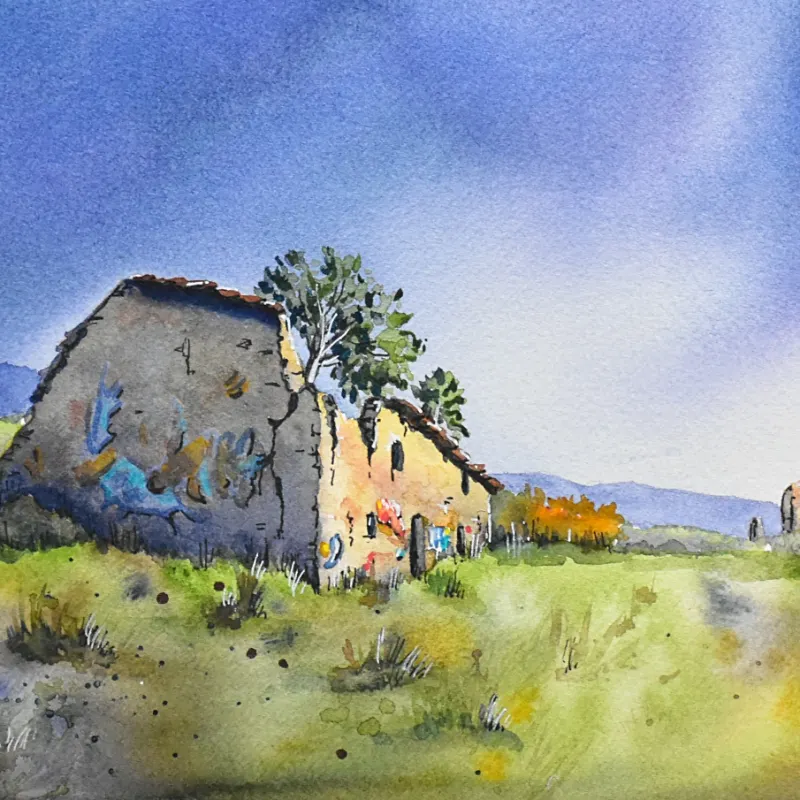
My darker washes had a subtle shine to them. Not glossy exactly, but definitely not matte either. It was most visible when the light hit at certain angles.
I’ve learned this is just a characteristic of honey-based paints — the honey attracts moisture even after drying, which creates that soft sheen.
When you'll notice it most:
Rich, saturated darks
Thicker applications
Under angled afternoon light
My take? In sketchbooks and plein air work, I find it adds a bit of luminosity that I've grown to like. But if you're creating work for scanning or reproduction, or you really prefer a completely flat, matte finish, it's worth testing first.
I've learned to see it as part of the paint's character rather than a flaw.
5. My palette stays workable for ages
This might be my single favourite discovery.
Plein air painting is so often about racing against time before everything dries on my palette, especially on warm days. With honey-based paints, that frantic energy is lessened somewhat.
Mixes stay wet and workable noticeably longer. I can play with colours, adjust ratios, try combinations — without constantly remixing because everything's dried out.
What this has changed for me:
Smoother, more thoughtful transitions
More experimental colour mixing (I'm not rushing)
Less paint waste (I can actually use most of what I mix)
While I haven’t used these pans in summer yet, I’m imagining that on hot summer days when regular watercolour dries in seconds, this extended open time is going to be genuinely valuable. It's given me permission to slow down and be more deliberate with colour choices.
I didn't realise how much the constant remixing was affecting my painting rhythm until it stopped being necessary.
6. The sticky palette problem (and my solution)
I painted with these pans a lot in Sardinia - on the beach, in autumn, in the sun. Warmth and humidity! Each time I opened my palette I’d find some of my pans had glued themselves to the lid. Not permanently - they peeled off easily enough - but it was annoying. And a little sticky.
The fix: I’ve cut a small piece of wax or parchment paper and I lay it gently over the pans before closing my palette. Problem completely solved.
7. They react to weather in ways my other paints don't
In humid coastal climates, my pans never felt completely hard — they stayed slightly soft and yielded easily under my brush. On really hot days, they become almost creamy. And ants seem to love them.
What I've learned:
Hot weather: Paints feel softer, almost buttery
Humid environments: Pans may never feel "dry" the way traditional paints do
Outdoor painting: Keep an eye out for curious insects
None of this has been a dealbreaker for me. But it's made me realize these paints are more "alive" to their surroundings than the heavily bound paints I was used to. They have opinions about the weather ;-)
So... Are Honey-Based Watercolours Worth Trying?
For me? Absolutely.
But I'll be honest — they're not for everyone.
They're brilliant if you value:
Effortless rewetting for spontaneous sketching
Fluid, responsive colour behaviour
The ability to rework and lift even after drying
Paints that travel easily
They might not be your thing if you prefer:
Strict layer separation for precise glazing
Completely matte finishes with no sheen
Paints that behave identically regardless of weather
Ready to Try Them?
If you're curious to explore honey-based watercolours yourself, I've partnered with Deep Deep Light to offer a special discount.
Use code: RENEELIGHT to save on your purchase.
My recommendation: Start with a small, curated palette of 6-12 colours. Get to know how they behave, how they mix, and how they feel under your brush before expanding to include more of their 100+ beautiful colours..
Usually I mix my colours.... Most of the time, I mix my own colours. It’s a wonderfully meditative part of the painting process and one I genuinely enjoy. Mixing gives me control, but also a sense o...
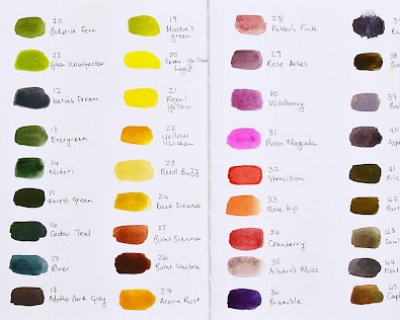
Swatched today!. I just tried out 45 new half pans from Deep Deep Light—and they are absolutely delicious. They just need a light spritz of water and a couple of minutes to soften (like rewetting dr...
I'm off to Italy next week for my last retreat of 2026 and I'm getting all sorts of things ready. One of them is, of course, my palettes. One of the questions I get asked a lot is how I decide which c...