
Watercolour Handbook
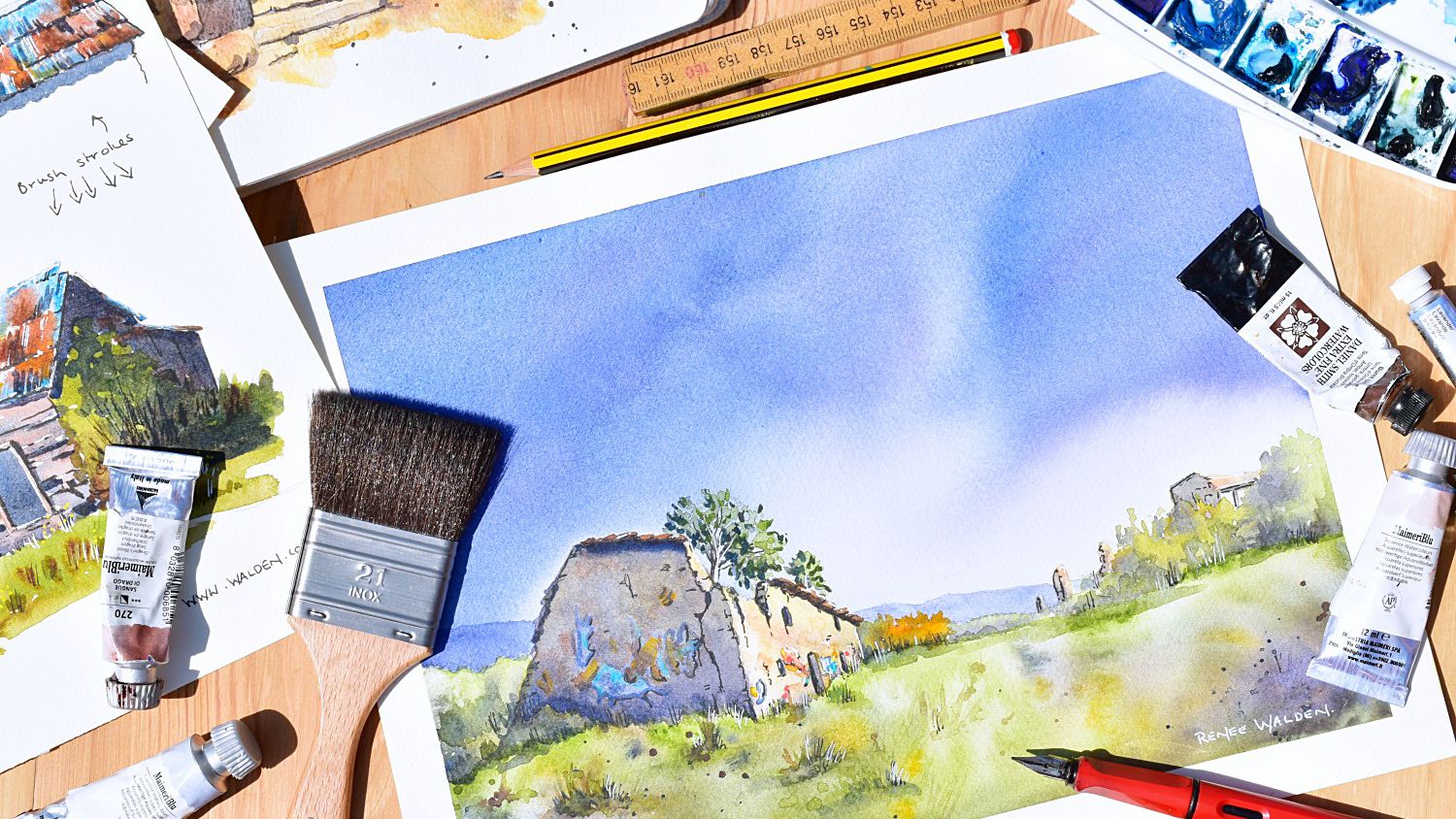
These practical techniques are what I teach on my retreats and in my Patreon lessons.
I've organised them here to help you master the essential skills and methods of watercolour painting.
Additionally you'll see that the subjects here are cross-referenced to my online lessons,
so you'll be able to follow the full practical demonstration if you wish.
-
Materials & Setup
Paper quality, palette wells, board angle, and workspace layout.
-
Pencil & Drawing
Shadow planning, ellipses, perspective, and composition thumbnails.
-
Painting Order
Light to dark, background to foreground, and when shadows come last.
-
Pen & Ink Finishing
Shadow-side pen work, white gel pen, splatter decisions, and when to stop.
-
Colour Mixing
Shadow pairs, mixing greens, granulation, and warm vs cool temperature in a scene.
-
Wet into Wet
Reading paper wetness, controlling timing, dropping in colours, and working on large areas.
-
Shadows
Complementary colours, reflected light, snow shadows, and common mistakes to avoid.
-
Negative Painting
Define light shapes by painting the dark around them — white flowers, foam, layered foliage.
-
White Subjects
Preserving the white of the paper, creating form and dimensions, and shadow colours.
-
Texture Effects
Salt, scoring, blooms, dry brush, splatter, credit card, and bokeh lifting.
-
Skies
Summer skies, clouds, stormy skies, and sunsets.
-
Trees & Foliage
Observing trees, autumn colour, winter bare trees, and figures for scale.
-
Water & Reflections
Still water, waves, reflections, rigging, wet surfaces, and sky-as-water washes.
-
Buildings & Architecture
Stonework, brickwork, old wood, corrugated iron, and shadows on buildings.
-
Animals
Lost edges, animal eyes, feathers, fur, backlighting, and white subjects.