
Pen & Ink Finishing
The stage that can make or break an otherwise excellent painting
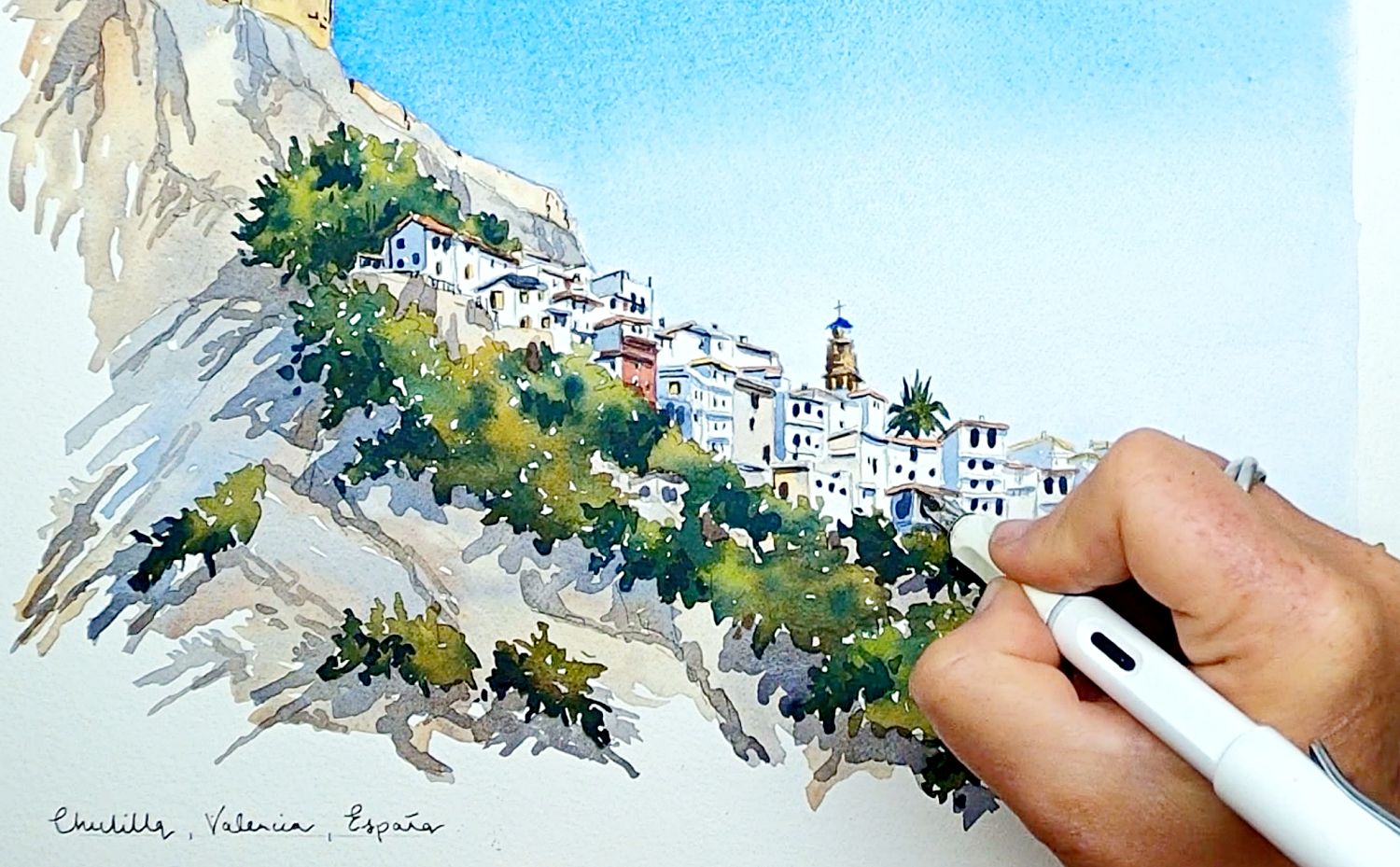
The decision: which approach?
There are two effective ways to combine pen and watercolour - pen before the wash, or pen after the wash. The critical mistake is failing to choose one and ending up in a no-man's-land where neither dominates and nothing looks intentional.
Option A: Washes dominant
The watercolour does the work; pen plays a subtle supporting role. Someone looking at the finished painting should barely notice the pen was used.
Option B: Pen dominant
The pen drawing is the main event; watercolour washes are light, transparent, and secondary. The structure comes from the ink; colour just fills it in.
Washes-dominant pen work
- Do your watercolour washes before the pen work
- Choose your ink colour based on your subject. Brown ink rather than black can be warmer, less harsh, blends better with watercolour tones, but a scene painted in cool tones might suit black ink better. Have fun with other colour inks too.
- For dark inks, you should work on shadow sides only and underneath elements
- Use a broken, varied line — lift the pen, change pressure, leave gaps. Try not to outline your beautiful washes and put them in a box.
- Concentrate pen detail at the focal point — almost nothing in the background
- Start very tentatively — add a little, stand back, decide if more is needed
- A white gel pen for the sunlit side can add sparkle and lift
The test: step back and ask whether the pen feels like a natural part of the painting or like it's sitting on top of it. It should compliment your washes, not fight with them.
Pen-dominant approach
- Draw with the pen before painting — the watercolour fills in around the ink lines
- You'll need waterproof ink for this approach
- Keep all washes very light and transparent so pen lines always show through
- Can be very expressive — cross-hatching for shadows, texture marks for foliage
- Add extra pen marks after the washes to reinforce shadow areas
- Still keep the background simple — even in a pen-dominant painting, recession comes from restraint at the back
- Posca markers or coloured pens can add flower, colour accents, or foreground detail
White gel pen & white posca
The counterpart to dark ink — white marks on sunlit sides and highlights.
White gel pen
- Works best over dark areas
- If it stops flowing, rinse the tip in water and wipe clean
- If it's still not flowing, it's probably run out of ink. This happens faster than expected
- Use it to thin out any dark pen marks that came out too heavy — a stroke of white over a thick dark line will reduce its apparent weight
- It's useful for highlights, sparkle, snow on branches, fine grass blades
White Posca / acrylic marker
- Makes bolder, more opaque marks than a gel pen
- Always shake with the lid on before opening — avoids paint spray
- Useful for reclaiming larger white areas (roof edges, rooflines, broad highlights, water splashes, white flowers)
Splatter as part of finishing
Splatter is most effective as a pre-pen step — added before picking up the ink so the randomness of splatter can be assessed before committing to marks that can't be removed.
- Splatter while washes are still wet for soft marks, when your painting is dry for hard marks.
- Splattering into a nearly dry wash with clean water can add blooms and texture.
- Try different brushes, wetness of the paint and flicking movements
- Cover background and sky areas with a sheet of paper
- Load a brush with foreground colours and flick across the painting
- White gouache splatter can add sparkle
- One restrained opaque accent colour (for example, cobalt turquoise or lavender), can be very effective
- Stand back and assess before moving to pen
When to stop
The most useful question at the pen stage: does this painting need anything more, or is the impulse to add more just habit?
- If the washes are already doing the job, put the pen down
- Every mark that isn't necessary is a risk
- Step back from your painting before deciding to add anything
- Once tape is removed, the clean edge transforms the painting — often it needs nothing more